
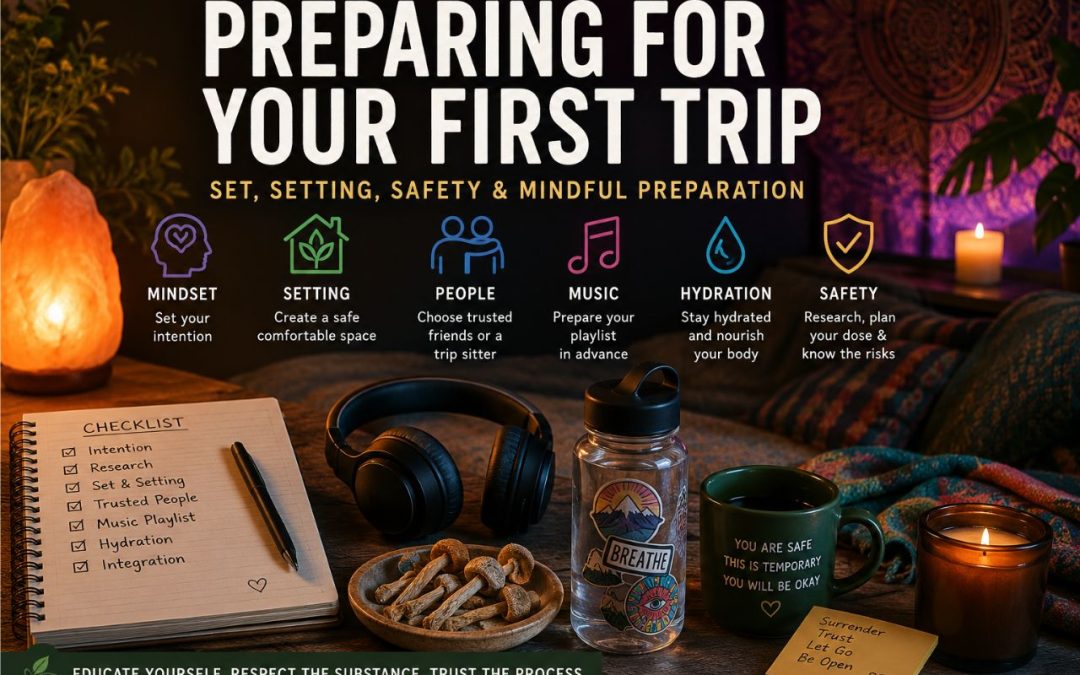
Preparing for Your First Trip
The first time someone plans a psychedelic or psychoactive experience, it is normal to focus mostly on the substance itself.
How much should I take?
How long will it last?
Will I see visuals?
Will I feel happy, emotional, relaxed, overwhelmed, connected, scared, or completely different than expected?
Those are important questions, but they are only part of the picture. A trip is not shaped by the substance alone. The experience is also shaped by your mindset, your environment, your body, your expectations, the people around you, the music playing, the lighting in the room, and how prepared you are if things become intense.
This is why preparation matters.
Whether someone is planning to use magic mushrooms, LSD, MDMA, ketamine, or another psychoactive substance, the safest starting point is education. These compounds are not all the same. They can differ in onset time, duration, intensity, redosing risk, body load, emotional effects, medication interactions and mental health considerations. Psychedelic and dissociative substances can temporarily alter mood, perception, thoughts and emotions, and psilocybin may produce emotions ranging from bliss to terror.
This guide is not here to encourage anyone to use substances. It is here because people make their own choices, and informed choices are safer than rushed, careless or unprepared ones.
Learn more about safe starting points in our beginner-friendly magic mushroom dosage guide.
Start With Your “Why”
Before planning any trip, take a moment to ask yourself why you are doing it.
Are you looking for fun, music and connection? Are you trying to reflect on something emotional? Are you curious about visuals or altered perception? Are you hoping to let go of stress? Are you using it at a festival, at home, with friends, or in a quiet personal setting?
There does not need to be one perfect reason, but there should be some awareness behind the choice. A rushed decision, pressure from friends, or the idea of “everyone else is doing it” is not the same as feeling personally ready.
A clear intention can help anchor the experience. It does not need to be serious or spiritual. It might be as simple as:
“I want to stay open.”
“I want to enjoy music with people I trust.”
“I want to slow down and reflect.”
“I want to feel connected to nature.”
“I want to learn something about myself.”
The intention is not a script. The trip may go somewhere completely different. But having a calm, grounded reason for entering the experience can help you feel less scattered if the effects become stronger than expected.
Understand Set and Setting
“Set and setting” is one of the most important ideas in psychedelic preparation.
“Set” means your mindset: your mood, thoughts, expectations, stress level, emotional state and mental health going into the experience.
“Setting” means your environment: where you are, who you are with, what sounds are around you, what the lighting feels like, whether you feel safe, and whether the space is calm or chaotic.
A person who feels safe, comfortable and supported in a peaceful environment may have a very different experience than someone who is stressed, overstimulated, surrounded by strangers or stuck somewhere they cannot relax. Research and harm-reduction literature often emphasize set and setting because context can strongly influence how a psychedelic experience unfolds.
Check Your Mindset Before You Start
Before taking anything, honestly check in with yourself.
Have you been sleeping well?
Are you already anxious or emotionally overwhelmed?
Are you in the middle of a conflict with someone?
Are you grieving, angry, panicked, or mentally exhausted?
Are you taking medications that could interact with the substance?
Do you have a personal or family history of psychosis, bipolar disorder, heart issues or other conditions that could increase risk?
A trip can amplify what is already present. That does not mean you need to feel perfect before every experience, but it does mean you should respect your current mental and physical state. If your body or mind is already under serious strain, postponing may be the wiser decision.
Choose the Right Setting
The best setting is one where you feel safe, relaxed and able to stay for the full duration of the experience.
For a first trip, a familiar home, quiet room, private backyard or peaceful outdoor space is usually easier to manage than a crowded party, festival, nightclub or unfamiliar public area. Busy environments can become overwhelming quickly, especially if the experience becomes more intense than expected.
Before the trip begins, prepare the space. Clean up clutter. Set out blankets, pillows, water, comfortable clothes and anything else that helps you feel calm. Make sure you know where the bathroom is. Have a place to sit or lie down. Avoid sharp hazards, risky balconies, unsafe water access, open flames or anything that could become dangerous if coordination or judgment changes.
The goal is not to control every second of the experience. The goal is to remove unnecessary stress before you are no longer in the best state to solve problems.
Be Careful Who You Trip With
The people around you can shape the experience as much as the substance itself.
For a first trip, choose people who feel safe, kind, emotionally steady and respectful. A trusted friend, sober trip sitter, or grounded person with experience supporting others can make a huge difference. The right person does not need to control the trip. They need to stay calm, patient and present.
Avoid tripping with people who bring the wrong energy.
That might mean people who are aggressive, chaotic, mocking, pushy, dramatic, unpredictable, dishonest, reckless or emotionally unsafe. It also includes people who pressure you to take more, mix substances, keep partying when you need quiet, or make you feel embarrassed for having a hard moment.
A difficult experience is much easier to move through when the people around you are calm. It can become much harder when someone laughs at you, argues with you, films you, dismisses your feelings, or tries to force the experience in a direction that does not feel right.
Should You Have a Trip Sitter?
For many first-time experiences, a trip sitter is a smart idea.
A trip sitter is usually someone who stays sober or mostly sober, understands the plan, knows what you took, and can help keep the environment safe. They are not there to boss you around. They are there to be steady if you become confused, anxious, emotional or physically uncomfortable.
A good trip sitter should be:
- calm under pressure
- emotionally mature
- nonjudgmental
- able to listen without trying to “fix” everything
- willing to help with water, blankets, music, lighting or a change of environment
- comfortable calling emergency help if something becomes medically serious
Research the Substance Before You Take It
Magic mushrooms, LSD, ketamine and MDMA are not interchangeable. They can feel very different, last different amounts of time, affect the body differently, and carry different risks.
Before taking anything, research that specific compound. Do not rely only on what a friend says. Learn the expected onset time, peak, total duration, common effects, common side effects, medication interactions, redosing concerns and signs that something may be medically wrong.
This is especially important because people sometimes panic when the effects do not begin right away. They assume “nothing is happening,” take more, and then the original amount starts to hit. With some substances, redosing too early can turn a manageable experience into one that feels overwhelming or unsafe.
A safer approach is to decide your plan before the experience begins. Know what you are taking. Know how much you intend to take. Know how long that substance can take to come on. Know how long you should wait before even considering whether redosing is appropriate. Once effects begin, decision-making may become less reliable.
Know What You Are Actually Taking
Unregulated substances can be mislabelled, contaminated, stronger than expected, or completely different than what someone believes they purchased. Drug checking is one harm-reduction tool that can help people make more informed decisions about unregulated substances before use. Island Health describes drug checking as a service that provides information about additives, composition and concentration, helping people make informed decisions before they consume.
Drug checking is not a guarantee of safety, but it is better than guessing. Reagent tests, lab testing and local harm-reduction services may help reduce some uncertainty, depending on what is available in your area.
Prepare Your Music Beforehand
Music can completely change the direction of a trip.
The right playlist can feel grounding, emotional, beautiful, comforting or energizing. The wrong song can feel jarring, chaotic or too intense. During a strong experience, something as simple as unlocking your phone, searching for a playlist, dealing with ads, or deciding what to play next can feel surprisingly difficult.
Prepare music before you start.
Choose a playlist that fits the type of experience you want. Some people prefer calm instrumental music, ambient sounds, nature sounds, acoustic songs, soft electronic music, or familiar albums that already feel safe. Others may want more upbeat music for a social setting. The key is to avoid needing to organize everything mid-trip.
Download the playlist if possible. Make sure the speaker is charged. Set the volume at a comfortable level. Have a backup option ready. If the vibe changes, music is one of the easiest ways to shift the emotional tone of the room.
A good playlist will not guarantee a good trip, but it can give the experience somewhere gentle to land.
Stay Hydrated, But Do Not Overdo It
Hydration matters, especially if someone is dancing, sweating, outdoors, at a festival, or using substances that can affect body temperature and thirst.
Keep water nearby. Sip slowly. Consider electrolytes if you are sweating a lot. Eat something light beforehand if that feels right for the substance and your body. Have easy snacks available for later, such as fruit, soup, crackers, smoothies or something gentle on the stomach.
At the same time, more water is not always better. This is especially important with MDMA, where overdrinking plain water can contribute to low sodium levels, also known as hyponatremia. Research has shown MDMA can increase the sodium-lowering effect of water intake, and severe water intoxication can cause confusion, seizures, coma and even death.
The practical point is simple: stay hydrated, but do not force huge amounts of water. Sip, rest, cool down when needed, and pay attention to your body.
Avoid Mixing Substances
Combining substances increases unpredictability.
Alcohol, cannabis, stimulants, dissociatives, psychedelics and prescription medications can all change the experience. Some combinations may increase anxiety, nausea, confusion, overheating, risky behaviour, memory gaps, blackouts, breathing problems or cardiovascular stress.
For a first trip, keeping things simple is safer. One substance is already enough information for your body and mind to process. Mixing substances makes it harder to understand what is causing what, and harder for a friend or medical professional to help if something goes wrong.
Ketamine and alcohol, for example, are a risky combination because both can impair coordination, judgment and consciousness. Reviews of ketamine and alcohol co-use describe serious concerns around combined central nervous system effects and medical risk.
Be Ready for a Hard Experience
Many people hope their first trip will be happy, visual, funny, loving or peaceful. It might be. But it may also become emotional, confusing, uncomfortable or challenging.
That does not automatically mean something has gone wrong.
A hard experience is not always a bad experience. Sometimes difficult emotions come up because the mind is processing fear, grief, shame, stress, old memories, unresolved conflict or something deep that has been pushed down. Some people describe these moments as a release. Others describe them as a lesson. Others simply experience them as intense and uncomfortable until they pass.
The key is not to panic the moment things become hard.
A difficult wave can feel permanent while it is happening, but the feeling will change. The trip will move. The body will metabolize the substance. The intensity will rise, peak and come down.
Remind yourself:
“This is temporary.”
“I took something, and it will pass.”
“I do not have to solve my whole life right now.”
“I can breathe.”
“I can change the music.”
“I can change the room.”
“I can ask for support.”
“I am safe.”
What to Do If the Trip Gets Difficult
If the experience becomes overwhelming, try changing one thing at a time.
Change the Music
Music can steer emotion quickly. If a song feels dark, chaotic or too intense, change it. Move to something softer, slower or more familiar. Silence may also feel better for some people.
Change the Lighting
Bright lights, flashing screens or harsh colours can feel overstimulating. Try softer lighting, warm lamps, candles that are safely placed, or natural light. If the room feels too dark, add gentle light. If it feels too bright, dim it.
Change the Environment
Sometimes the room becomes associated with the hard feeling. Moving from inside to outside, or outside to inside, can help reset the nervous system. A quiet backyard, a calm bedroom, a cozy couch, a porch, or a different room may feel completely different.
Do not wander into unsafe public areas, traffic, water, cliffs, balconies or unfamiliar places. The goal is a safe environmental shift, not a risky adventure.
Change Body Position
Lie down. Sit up. Wrap yourself in a blanket. Take off tight clothing. Stretch gently. Step outside for fresh air if safe. Sometimes physical comfort can reduce mental intensity.
Breathe Slowly
Simple breathing can help. You do not need a complicated technique. Try slow inhales, slow exhales, and remind yourself that the feeling is moving through you.
Talk to a Grounded Person
A calm friend can help you remember that you are safe. They do not need to explain your entire experience. Sometimes the best support is simple:
“You’re safe.”
“This will pass.”
“You took something, and it’s temporary.”
“You’re doing okay.”
“Let’s change the music.”
“Let’s move to a quieter room.”
“Have a sip of water.”
Know When to Get Medical Help
Most difficult trips pass with time, reassurance and a safer environment. But some situations need medical help.
Call emergency services if someone has chest pain, trouble breathing, seizures, repeated vomiting, unconsciousness, extreme overheating, signs of injury, violent behaviour, severe confusion that does not improve, or symptoms that feel medically dangerous.
Also seek professional help if someone continues to feel disconnected, paranoid, unable to sleep, severely anxious, depressed, or mentally unwell after the substance should have worn off.
There is no shame in getting help. A responsible friend or trip sitter should be willing to call for medical support when safety is more important than embarrassment, fear or legality.
Plan the Come-Down and the Next Day
A trip does not end the moment the strongest effects fade.
Plan the rest of the night. Do not drive. Do not make major life decisions. Do not send emotional messages you may regret. Do not go back to work or responsibilities too quickly. Give yourself space to rest.
The next day, you may feel clear, tired, emotional, peaceful, raw or reflective. Eat nourishing food. Hydrate. Sleep. Write down anything that felt meaningful. Talk to someone trustworthy if something came up that you want to process.
This is sometimes called integration. It simply means giving yourself time to understand the experience instead of rushing away from it.
A First Trip Preparation Checklist
Before the experience, make sure you have thought through the basics:
- What substance are you taking?
- Have you researched that specific substance?
- Do you understand the expected onset, peak and duration?
- Have you planned your dose before consuming?
- Have you decided not to redose impulsively?
- Are you in a safe environment?
- Are you with people you trust?
- Is there a sober or grounded person available?
- Do you have water and electrolytes nearby?
- Is your playlist ready?
- Is your phone charged?
- Do you have comfortable clothing, blankets and a calm place to rest?
- Do you know what to do if the experience becomes difficult?
- Do you have emergency help available if needed?
Preparation does not remove all risk. But it can reduce avoidable problems.
Frequently Asked Questions
What is the most important thing to prepare before a first trip?
The most important preparation is creating a safe set and setting. Your mindset, environment and the people around you can strongly influence the experience. A calm space with trusted people is usually a better choice than a chaotic or unpredictable environment.
Should I trip alone for my first time?
For most people, tripping alone for the first time is not ideal. A trusted friend, sober trip sitter, or grounded person nearby can help if the experience becomes confusing, emotional or overwhelming.
What kind of music is best for a trip?
There is no single best playlist. Many people prefer calming, familiar or emotionally safe music. Instrumental, ambient, acoustic, nature-based or gentle electronic music can work well. The most important thing is preparing the playlist before the trip so you are not trying to organize music while already altered.
What should I do if I start having a bad trip?
Try not to label it as “bad” right away. Remind yourself that the feeling is temporary. Change the music, lighting, room, body position or environment if safe. Breathe slowly and ask a trusted person for support. A hard experience may feel intense, but it can still pass and sometimes become meaningful afterward.
Is redosing a good idea?
Redosing should never be impulsive. Different substances have different onset times and durations, and taking more too soon can make the experience much stronger than expected. Research the specific compound before consuming and decide your plan ahead of time.
Is hydration important?
Yes, but balance matters. Sip water and consider electrolytes, especially if dancing, sweating or outdoors. Do not force excessive amounts of water, especially with MDMA, because too much plain water can contribute to dangerous low sodium levels.
Can a hard trip still be valuable?
Yes. Not every hard experience is a bad experience. Some difficult moments may bring up emotions, memories or insights that need attention. That does not mean every difficult trip is automatically healing, but with safety, support and time, some people find meaning in what came up.
Final Thoughts: Preparation Creates More Room for Safety
A first trip can be exciting, emotional, beautiful, strange, funny, uncomfortable, meaningful, confusing, or all of those things at once.
The substance matters, but it is not the whole story. Your mindset matters. Your space matters. Your playlist matters. Your people matter. Your dose research matters. Your ability to pause, breathe and remember that the experience is temporary matters.
Do not rush into a trip just because the opportunity appears. Plan it. Respect it. Learn about the substance. Choose the right environment. Be careful who you are with. Have support available. Prepare for the possibility that the experience may be difficult, and remember that difficult does not always mean bad.
A safer trip begins before anything is consumed.