
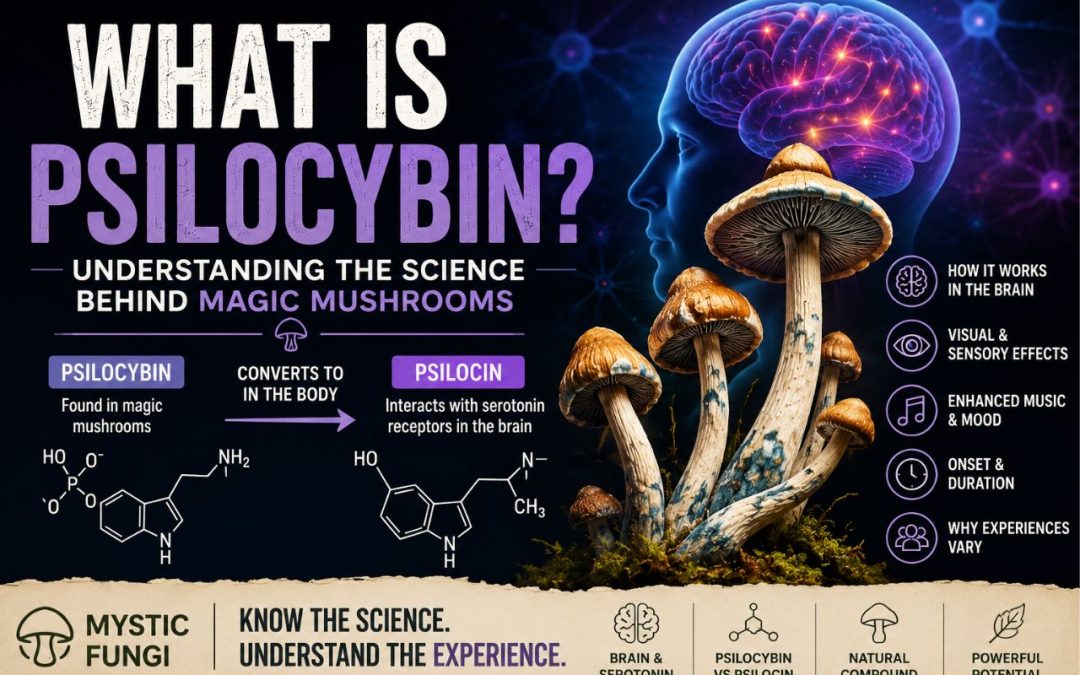
When people talk about magic mushrooms, they are usually talking about the effects of a naturally occurring compound called psilocybin. Found in numerous species of psychedelic mushrooms, psilocybin is responsible for the altered perception, enhanced sensory experiences, visual changes, and shifts in thinking that have made magic mushrooms famous around the world.
Although many people recognize the word psilocybin, fewer understand what it actually is or how it works inside the body. Understanding psilocybin helps explain why different mushroom strains can produce unique experiences and why factors such as dosage, environment, and individual sensitivity can have such a significant impact.
Whether you’re completely new to magic mushrooms or simply interested in the science behind them, this guide explains what psilocybin is, how it works, and why it produces such distinctive effects.
What Is Psilocybin?
Psilocybin is a naturally occurring psychedelic compound found in certain mushroom species.
It is considered a prodrug, which means psilocybin itself is not primarily responsible for the effects people experience. Instead, once consumed, psilocybin is converted by the body into another compound called psilocin.
Psilocin is the substance that interacts with the brain and produces the effects commonly associated with magic mushrooms.
Psilocybin can be found in many mushroom species, but the most commonly known varieties belong to the species Psilocybe cubensis.
Popular cubensis strains include:
- Golden Teacher
- B+
- White Rabbit
- Blue Meanie
- Wavy Z
- Tidal Wave
- Penis Envy
- Albino Penis Envy
- Albino Jedi Mind Fuck
How Does Psilocybin Become Psilocin?
After mushrooms are consumed, the digestive system begins converting psilocybin into psilocin.
This conversion occurs naturally as the compound is processed by the body.
Once psilocin enters the bloodstream, it travels to the brain where it interacts with specific serotonin receptors.
Serotonin is a neurotransmitter involved in regulating:
- Mood
- Perception
- Memory
- Emotions
- Sleep
- Sensory processing
Because psilocin interacts with these systems, it can influence how a person experiences thoughts, emotions, sounds, colours, and surroundings.
How Does Psilocin Affect the Brain?
Scientists believe that psilocin primarily interacts with serotonin 5-HT2A receptors.
These receptors are widely distributed throughout areas of the brain involved in:
- Awareness
- Visual processing
- Emotional responses
- Pattern recognition
- Self-reflection
When these pathways become more active, people may experience changes in perception and thinking that differ from normal waking consciousness.
Many researchers believe this increased communication between different brain regions may help explain why people often describe mushroom experiences as feeling novel, meaningful, or highly immersive.
Why Do Magic Mushrooms Cause Visual Effects?
Visual effects are among the most commonly recognized aspects of a psilocybin experience.
Many people report:
- Enhanced colours
- Greater appreciation of textures
- Increased pattern recognition
- Movement within stationary objects
- Enhanced appreciation of nature
- Visual distortions
The intensity of visual effects varies considerably from person to person and is influenced by factors such as strain, individual sensitivity, environment, and the amount consumed.
Some mushroom varieties are commonly associated with stronger visual experiences than others.
Why Does Music Often Sound Better?
One of the most frequently reported effects of psilocybin is an enhanced appreciation of music.
Many people describe:
- Greater emotional connection to songs
- Increased awareness of individual instruments
- Enhanced appreciation of rhythm
- More immersive listening experiences
This is one reason music is often considered an important part of many mushroom experiences.
Why Can Thoughts Feel Different?
Psilocybin is often associated with changes in thinking patterns.
Many people report:
- Viewing situations from new perspectives
- Increased creativity
- Greater curiosity
- More reflective thinking
- Enhanced appreciation of ideas
Some people find themselves noticing details or connections they might normally overlook.
Because everyone processes information differently, these experiences vary considerably from person to person.
How Long Does Psilocybin Take to Work?
One of the most common questions involves onset time.
While onset varies significantly, many people report that dried mushrooms can take 90 minutes to 2 hours before effects become fully noticeable.
Factors that influence onset include:
- Body weight
- Metabolism
- Recent food intake
- Individual sensitivity
- Mushroom variety
- Amount consumed
The same amount can feel different for different people, which is one reason experience reports vary so widely.
Does Every Mushroom Strain Contain Psilocybin?
Most popular magic mushroom strains contain psilocybin, but the amount can vary.
This variation is one reason some strains have developed reputations for being stronger than others.
For example:
Golden Teacher
Often viewed as a balanced and approachable cubensis variety.
B+
Known for moderate potency and versatile effects.
White Rabbit
Often described as warm, uplifting, and moderately potent.
Penis Envy
Generally regarded as significantly stronger than many standard cubensis strains.
Albino Penis Envy
Widely considered one of the most potent cubensis varieties available.
Psilocybin vs Psilocin: What’s the Difference?
Although the terms are often used interchangeably, they are not exactly the same thing.
Psilocybin
- Found naturally in mushrooms
- Relatively stable
- Converted by the body after consumption
Psilocin
- Produced after psilocybin is metabolized
- Directly interacts with serotonin receptors
- Responsible for psychedelic effects
In simple terms, psilocybin is the starting compound and psilocin is the compound that actually produces the experience.
Why Do Experiences Vary So Much?
Even when two people consume the same mushroom strain, experiences can differ dramatically.
Factors that may influence an experience include:
Amount Consumed
One of the largest factors affecting intensity.
Individual Sensitivity
People naturally respond differently.
Environment
Surroundings can influence mood and perception.
Expectations and Mindset
Many people find that mindset can influence how an experience unfolds.
Mushroom Potency
Potency can vary between strains, harvests, and even individual mushrooms.
Frequently Asked Questions
What is psilocybin?
Psilocybin is a naturally occurring psychedelic compound found in certain mushroom species.
What does psilocybin turn into?
After consumption, psilocybin is converted into psilocin, which interacts with serotonin receptors in the brain.
Why do magic mushrooms produce visual effects?
Psilocin affects areas of the brain involved in perception and sensory processing, which can contribute to visual changes.
How long does psilocybin take to work?
Many people report effects becoming noticeable within 90 minutes to 2 hours, although onset varies considerably.
Do all mushroom strains contain the same amount of psilocybin?
No. Potency varies between strains, harvests, and individual mushrooms.
Final Thoughts
Psilocybin is the naturally occurring compound that makes magic mushrooms unique. Once consumed, it is converted into psilocin, which interacts with serotonin receptors throughout the brain and contributes to changes in perception, mood, sensory awareness, and thought patterns.
Understanding how psilocybin works helps explain why mushroom experiences can vary so widely and why different strains have developed their own reputations over time. Whether discussing Golden Teacher, B+, White Rabbit, Wavy Z, Penis Envy, or Albino Penis Envy, the science begins with the same naturally occurring compound: psilocybin.