
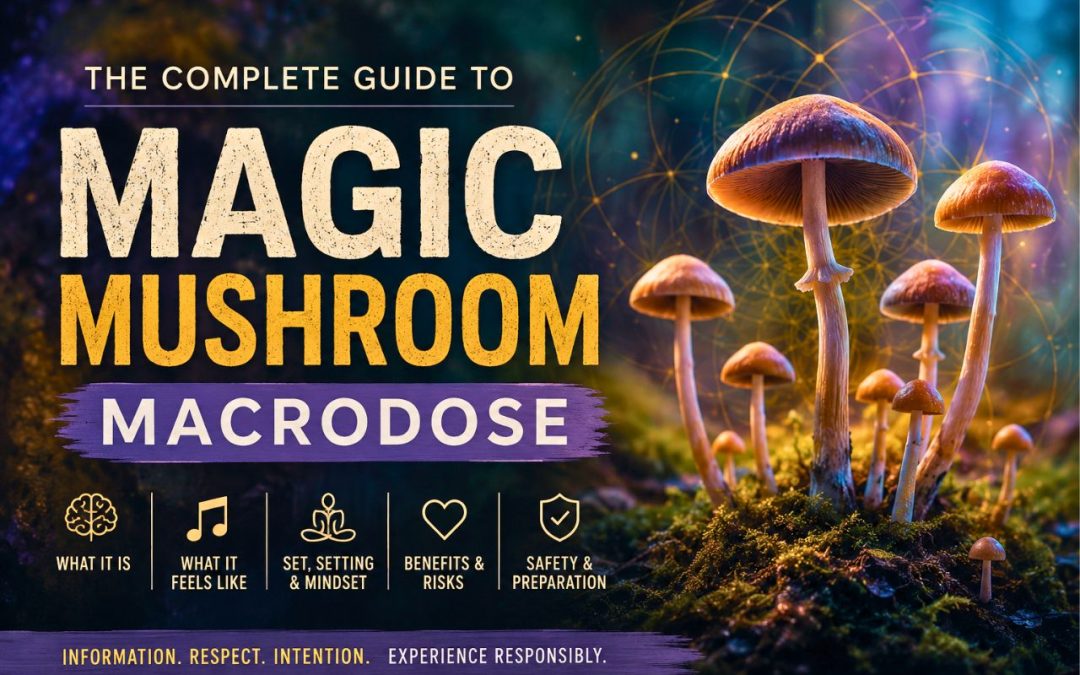
What Is a Magic Mushroom Macrodose?
Magic mushroom experiences can vary widely. Some people are interested in subtle, low-intensity experiences, while others want to understand the deeper, more immersive side of psilocybin.
That is where the word macrodose comes in.
A magic mushroom macrodose generally refers to a stronger psilocybin experience where the effects are clearly noticeable. Unlike microdosing, where the goal is usually subtle support without strong perceptual changes, macrodosing is associated with more obvious shifts in mood, thought, perception, body awareness, music sensitivity, emotional processing, and sense of connection.
A macrodose is not something to treat casually. Stronger psychedelic experiences can feel beautiful, emotional, insightful, confusing, intense, or uncomfortable depending on the person, the environment, the mindset, and the situation.
This article explains what a macrodose means, how it differs from microdosing, why set and setting are so important, how music can shape the experience, and why psilocybin should be approached with caution, respect, and education.
What Does Macrodose Mean?
A macrodose is a larger, more noticeable psychedelic experience. The word is often used to describe a level of psilocybin where the person is no longer simply going about a normal day. Instead, the experience may become immersive enough to affect perception, emotion, thinking, energy, and awareness.
A macrodose may involve:
- Stronger emotional shifts
- Enhanced music sensitivity
- More noticeable visuals
- Altered sense of time
- Deeper reflection
- Body sensations
- Heightened awareness of energy, mood, and environment
- A stronger connection to nature, people, memories, or emotions
- Moments of discomfort, uncertainty, or emotional release
Because the experience can be powerful, macrodosing is very different from casual use. A strong psilocybin experience can bring up personal memories, emotional patterns, relationship dynamics, unresolved grief, fear, joy, gratitude, or insight.
For some people, that can feel meaningful. For others, it can feel overwhelming.
That is why mindset, setting, support, and preparation matter so much.
Macrodosing vs Microdosing
The easiest way to understand a macrodose is to compare it with microdosing.
Microdosing
Microdosing usually refers to taking a very small amount of psilocybin, often with the intention of staying functional, clear, and grounded. People often associate microdosing with mood support, creativity, focus, emotional balance, and subtle perspective shifts.
A microdose is generally meant to be mild.
Macrodosing
Macrodosing is different. A macrodose is meant to be felt. It may shift how someone experiences music, emotions, relationships, memories, visuals, and their own thoughts.
A macrodose is usually not something people take before errands, work, driving, or normal daily responsibilities. It is a stronger experience that requires space, time, safety, and the right environment. Because strength can vary so much, anyone trying to understand intensity should read our blog how much magic mushrooms should I take before comparing different types of mushroom experiences.
What Can a Macrodose Feel Like?
Every experience is different. Magic mushrooms are naturally variable, and people respond differently based on body chemistry, mental state, environment, tolerance, medications, and potency.
That said, many stronger psilocybin experiences are described in a few common ways.
Enhanced Music Sensitivity
Music can become much more meaningful during a stronger mushroom experience. A song may feel deeper, warmer, more emotional, or more alive. People may notice small details in the music that they normally miss.
Rhythm, melody, vocals, bass, and atmosphere can all feel more powerful. Music may guide the emotional tone of the experience, helping someone feel calm, uplifted, reflective, connected, or comforted.
In clinical psychedelic research, music is often treated as an important part of the supported experience. Researchers have studied how music can shape psychedelic therapy sessions, and many psilocybin therapy models use carefully chosen playlists as part of the setting and support structure. This does not mean music guarantees a positive experience, but it shows that sound can meaningfully influence the emotional environment.
Feeling More Connected to Energy
Many people describe feeling more in tune with the “energy” of a room, a person, a song, or a natural environment. This may not be easy to explain scientifically, but it is commonly described as heightened sensitivity to mood, atmosphere, body language, emotion, and surroundings.
A comfortable space may feel deeply peaceful. A tense space may feel uncomfortable. A warm conversation may feel more meaningful. A harsh environment may feel overstimulating.
This is one reason setting matters so much. During a macrodose, the environment may feel amplified.
Visual Changes
Some people experience visual changes during stronger psilocybin experiences. These may include enhanced colours, shifting patterns, movement in textures, closed-eye imagery, or a more vivid sense of light and depth.
Visuals can vary a lot. Some people experience strong visuals, while others feel the experience more emotionally, mentally, or physically. This is one reason it helps to understand the broader range of magic mushroom effects before comparing one experience to another.
Emotional Openness
A macrodose may make emotions feel closer to the surface. Some people feel joy, gratitude, love, empathy, or awe. Others may feel sadness, fear, regret, grief, or vulnerability.
This emotional openness is one reason some people view psilocybin as potentially useful for reflection and healing. However, it is also why stronger experiences can become difficult if someone is not prepared or supported.
Body Feel
The body feel can vary depending on the mushroom, person, and experience. Some people feel relaxed, heavy, warm, light, tingly, or energized. Others may feel restless, nauseous, tense, or physically uncomfortable.
The body can feel more noticeable during a macrodose. Breathing, posture, temperature, and surroundings may all feel more important.
Time Distortion
Time may feel slower, faster, stretched out, or hard to track. A short period may feel much longer, and emotional moments may feel very large.
This can be meaningful, but it can also be uncomfortable if someone becomes anxious. Remembering that the experience is temporary can help people stay grounded.
Why Mindset Matters So Much
The phrase set and setting is one of the most important ideas in psychedelic education.
Set means mindset.
Setting means environment.
Mindset includes how someone feels before the experience. Stress, fear, anger, grief, insecurity, pressure, or emotional instability can strongly affect how the experience unfolds.
A calm, open, and grounded mindset does not guarantee a positive experience, but it can make the experience easier to navigate.
Before any intense psychedelic experience, it is important to consider:
- Current emotional state
- Stress level
- Mental health history
- Recent life events
- Relationship tension
- Sleep quality
- Medication use
- Whether the person feels safe
- Whether the person feels pressured
- Whether the person has support nearby
A macrodose can bring hidden emotions forward. That can be helpful in the right context, but it can also be overwhelming.
This is why strong mushroom experiences should not be approached during emotional chaos, unsafe situations, major conflict, or unstable mental health periods.
Why Setting Matters
Setting can shape the entire experience.
During a macrodose, the environment may feel amplified. Lighting, noise, people, temperature, clutter, music, smells, and overall atmosphere can all influence the emotional tone.
A comfortable setting may help someone feel safe and relaxed. A loud, chaotic, unfamiliar, or tense setting may increase anxiety or discomfort.
Important setting factors include:
- Being somewhere physically safe
- Avoiding stressful people or conflict
- Having enough uninterrupted time
- Keeping the environment calm and comfortable
- Choosing music intentionally
- Avoiding risky activities
- Staying away from driving or responsibilities
- Having access to water, a washroom, and a quiet place
Macrodosing is not only about the mushroom. It is about the whole container around the experience.
The Importance of Music During a Macrodose
Music can be one of the most powerful parts of a mushroom experience.
A good playlist can help shape the mood. It can bring comfort, emotion, movement, beauty, reflection, or release. Some people feel like they understand songs in a completely new way. Others feel more connected to rhythm, vibration, and emotional tone.
Music may help someone move through different phases of the experience:
- Calm music may help with relaxation
- Nature sounds may feel grounding
- Warm instrumental music may support reflection
- Familiar songs may bring comfort
- Harsh or chaotic music may feel overwhelming for some people
Because music can strongly influence mood, it should be chosen carefully. A song that feels normal while sober may feel much more intense during a macrodose.
If the mood becomes uncomfortable, changing the music may help shift the emotional tone. This does not “fix” everything, but it can sometimes help someone feel more comfortable.
What If the Experience Starts Feeling Difficult?
Strong mushroom experiences are not always easy. Some people call this a “bad trip,” but a more balanced way to describe it is a challenging experience.
A challenging experience may include anxiety, fear, sadness, confusion, uncomfortable thoughts, body tension, or feeling overwhelmed.
If that happens, one of the most important things to remember is:
It is an experience, and it will not last forever.
Psilocybin effects are temporary. The feeling may be intense in the moment, but it will pass.
Changing the environment may also help. This could mean moving to a quieter room, adjusting the lighting, changing the music, stepping away from overstimulation, or being near a calm and trusted person.
The goal is not to fight the experience. Fighting can sometimes increase discomfort. A softer approach is to breathe, slow down, remember that the effects are temporary, and return attention to something grounding.
This is also why preparation matters. A strong experience is easier to navigate when the setting is safe and the person is not alone in an unsafe situation.
Can Macrodosing Help With Trauma?
Some people report that strong psilocybin experiences help them look at painful memories, grief, trauma, or emotional patterns from a new perspective. In clinical and therapeutic settings, psilocybin is being studied for depression, distress, addiction, and other mental health conditions.
However, trauma is serious. A macrodose is not automatically healing, and it can bring difficult material to the surface. Without proper support, that can be destabilizing for some people.
Current research into psilocybin-assisted therapy usually involves screening, preparation, professional support, and integration afterward. It is very different from an unsupported experience. Reviews of psilocybin research have found promising results for depression, but they also emphasize that many studies are still limited by sample size, design, and the need for more evidence.
For trauma, professional support matters. A strong mushroom experience may help some people reflect, but it should not be treated as a guaranteed treatment or a replacement for qualified mental health care.
Can Macrodosing Help Relationships?
Some people describe feeling more empathy, openness, honesty, and emotional connection during or after a strong mushroom experience. In a safe and loving relationship, this may support deeper conversations, forgiveness, gratitude, and understanding.
For couples, the potential benefit is not simply the mushroom itself. It is the emotional openness, the willingness to listen, and the reflection that may happen afterward.
However, relationship dynamics can also feel amplified. If there is unresolved conflict, mistrust, resentment, jealousy, or emotional instability, a macrodose can bring those feelings forward in an intense way.
For that reason, macrodosing should not be used as a shortcut to fix a relationship. It may support reflection for some people, but healthy communication, honesty, emotional safety, and follow-up conversations are still what matter most.
A strong experience may open a door, but the relationship work happens afterward.
Can Macrodosing Help People Get Off Hard Drugs?
This is a sensitive topic and should be handled carefully.
Some people report that psilocybin helped them reflect on addiction, substance use, habits, grief, pain, or the reasons they were using other substances. Research is also exploring psilocybin-assisted therapy for addiction, including alcohol use disorder.
A well-known randomized clinical trial published in JAMA Psychiatry found that psilocybin-assisted psychotherapy reduced heavy drinking days in people with alcohol use disorder compared with active placebo treatment. Importantly, this was done with psychotherapy and a structured clinical approach, not as a casual or unsupported experience.
That distinction matters.
Psilocybin should not be presented as a guaranteed way to quit hard drugs. Addiction can involve physical dependence, withdrawal risk, trauma, mental health conditions, social environment, and medical danger. Some substances can have dangerous or even life-threatening withdrawal symptoms without medical care.
A more accurate statement is:
Psilocybin may support self-reflection and behaviour change for some people, especially when combined with proper support, therapy, and integration, but it is not a stand-alone cure for addiction.
For people dealing with serious substance use, medical and professional support is important.
Where Microdosing May Fit After a Strong Experience
Some people are interested in following a strong mushroom experience with a lower-intensity microdosing routine. The idea is that a macrodose may create a major perspective shift, while microdosing afterward may help support continued reflection, mood awareness, and integration.
This is a common topic in psychedelic communities, but it should still be approached carefully. More is not always better, and frequent use can build tolerance or become psychologically ungrounded for some people.
The most important part after a macrodose is integration.
Integration means taking time to reflect on what came up and how to apply it in real life. That may include journaling, therapy, honest conversations, lifestyle changes, rest, exercise, meditation, or simply making better daily choices.
Without integration, even a powerful experience can fade without creating lasting change.
Macrodosing and Personal Growth
A macrodose can feel meaningful because it may temporarily change how someone sees themselves, their relationships, their habits, or their life.
People may come away thinking about:
- What they need to let go of
- What relationships matter most
- How they treat themselves
- How they treat others
- Whether they are living honestly
- What habits are holding them back
- What emotions they have avoided
- What they want to change
This is why psilocybin experiences are often described as introspective. They may bring people closer to feelings they normally ignore.
However, insight is only useful if it becomes action. A mushroom experience does not automatically change someone’s life. The changes happen through daily decisions afterward.
Why Macrodosing Is Not for Everyone
Macrodosing can be intense. Some people should be especially cautious or avoid strong psychedelic experiences entirely.
Important risk factors may include:
- Personal or family history of psychosis
- Bipolar disorder or manic episodes
- Severe anxiety or panic disorder
- Unstable depression
- Recent trauma or major emotional crisis
- Certain medications, including some antidepressants
- Heart or blood pressure concerns
- Lack of a safe environment
- Feeling pressured by others
- Being underage
- Lack of trusted support
Research and clinical discussions continue to note that psilocybin can cause distressing psychological experiences, anxiety, and other adverse effects, especially outside structured settings or in vulnerable individuals.
A macrodose should never be treated like a party trick. It is a powerful experience that deserves respect.
Macrodosing and Antidepressants
Antidepressants can change the way magic mushrooms feel. SSRIs and SNRIs may reduce or alter the effects of psilocybin for some people, while other medications may create different risks or interaction concerns.
This is important because some people may think a macrodose “didn’t work” when medication, tolerance, or individual biology may be affecting the experience.
People taking antidepressants or other prescription medications should not stop or change medication without speaking to a qualified healthcare professional.
Common Myths About Macrodosing
Myth 1: A stronger experience is always better
Not true. Stronger does not automatically mean better, safer, or more healing. Sometimes a moderate, grounded experience can be more useful than an overwhelming one.
Myth 2: Macrodosing guarantees healing
A macrodose may support reflection, but it does not guarantee healing. Trauma, addiction, depression, and relationship struggles often require ongoing support and real-life change.
Myth 3: A bad trip means something went wrong
A difficult experience does not always mean the entire experience is wasted. Sometimes discomfort comes from emotions, fear, resistance, or unresolved material. However, challenging experiences can also be destabilizing, which is why preparation and support matter.
Myth 4: Music does not matter
Music can matter a lot. Sound can shape the emotional direction of a strong mushroom experience.
Myth 5: Macrodosing is the same for everyone
It is not. Mushroom potency, mindset, setting, tolerance, body chemistry, and life circumstances all change the experience.
Final Thoughts
A magic mushroom macrodose is a stronger psilocybin experience that may bring noticeable changes in perception, emotion, music sensitivity, body awareness, introspection, and connection.
For some people, macrodosing can feel meaningful, emotional, spiritual, or deeply reflective. It may help people think about trauma, relationships, habits, addiction, grief, and personal growth from a new perspective. But it can also be intense, uncomfortable, confusing, or overwhelming.
That is why mindset and setting are essential.
The space matters.
The music matters.
The people around you matter.
The emotional state you bring into the experience matters.
The support and integration afterward matter.
If the experience becomes difficult, remembering that it is temporary can help. Changing the music, adjusting the environment, moving to a calmer space, or being near a trusted person may help someone feel more grounded.
Macrodosing should never be treated casually or promoted as a cure. Current research into psilocybin-assisted therapy is promising in areas such as depression and alcohol use disorder, but clinical research involves screening, support, and professional care — not unsupported use.
The best approach is education, respect, caution, and honest self-awareness.