
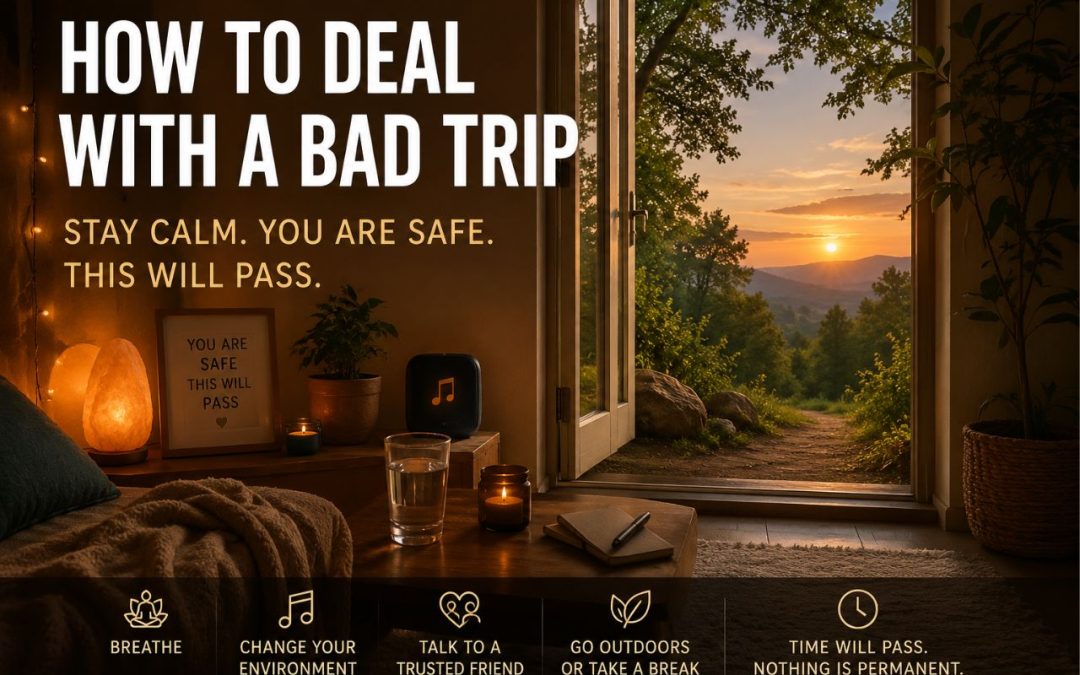
How to Deal With a Bad Trip
A bad trip can feel intense, confusing, emotional, or scary in the moment. For some people, it may feel like their thoughts are moving too fast. For others, it may feel like anxiety, sadness, fear, or discomfort has suddenly become much bigger than expected.
But one of the most important things to remember is this:
The experience is temporary. The feeling will pass. Nothing about the moment is permanent.
That simple reminder can make a big difference.
Many people now prefer the term “challenging trip” instead of “bad trip,” because not every difficult mushroom experience is meaningless or negative. Sometimes the uncomfortable parts of a psychedelic experience are connected to stress, fear, grief, unresolved emotions, poor setting, or simply taking more than the person was prepared for. Research and harm-reduction resources often emphasize that mindset, environment, support, and preparation can strongly influence how psychedelic experiences unfold.
This article is not meant to encourage unsafe use or replace medical advice. It is a harm-reduction guide for understanding what can help when a mushroom experience becomes overwhelming.
What Is a Bad Trip?
A bad trip is a difficult or distressing psychedelic experience. It can include anxiety, fear, confusion, emotional discomfort, racing thoughts, paranoia, sadness, panic, or a feeling of being overwhelmed.
It does not always look the same for everyone.
One person may become quiet and withdrawn. Another may talk rapidly or feel restless. Someone else may feel stuck in a loop of negative thoughts. In some cases, the person may feel like the experience will never end, even though it will.
That is why reassurance is so important.
A difficult trip can feel permanent while it is happening, but it is not permanent. The intensity rises, shifts, and eventually fades. Sometimes the best first step is not to “fix” everything right away, but to help the person feel safe enough to move through the moment.
Why Bad Trips Happen
Bad trips can happen for many reasons. Sometimes there is one clear trigger. Other times, several things combine at once.
Common factors include:
- An uncomfortable or chaotic environment
- Stress, anxiety, or unresolved emotions before the experience
- Taking more than expected
- Being around the wrong people
- Loud, intense, or unsettling music
- Feeling trapped indoors or exposed outdoors
- Mixing substances
- Lack of preparation
- Not having a trusted sober person nearby
- Trying to fight the experience instead of calming the body and mind
Psilocybin can strongly affect perception, emotion, and thought patterns. Health Canada notes that magic mushrooms can produce effects such as altered perception, anxiety, panic, nausea, increased heart rate, and changes in mood or judgment.
This is one reason set and setting matter so much.
“Set” means the person’s mindset: mood, expectations, stress level, emotional state, and intention.
“Setting” means the environment: room, lighting, music, people, noise, comfort, safety, and surroundings.
A peaceful setting does not guarantee a perfect experience, but it can reduce the chances of panic and make difficult moments easier to handle.
First Reminder: The Time Will Pass
During a bad trip, time can feel distorted. Minutes may feel much longer than they really are. This can make the person believe they are stuck or that the feeling will never end.
That is not true.
A helpful reminder is:
“This is temporary. You are safe. This will pass.”
This should be repeated calmly, without pressure.
The goal is not to argue with the person or convince them that their feelings are wrong. The goal is to help them remember that the experience has a beginning, middle, and end.
Simple phrases can help:
“You are safe.”
“This is temporary.”
“You took something, and it will wear off.”
“You do not have to figure everything out right now.”
“Just breathe. I’m here with you.”
“Nothing is permanent. This feeling will pass.”
Sometimes the person does not need a long explanation. They may just need a calm voice, a steady presence, and reassurance that they are not alone.
Change the Environment
One of the most helpful things during a difficult trip can be a gentle change in environment.
A bad trip can sometimes get worse when someone feels stuck in the same uncomfortable loop. The same room, same lighting, same sounds, or same position can begin to feel overwhelming. A small change can shift the emotional direction of the experience.
This does not have to be dramatic.
Sometimes it is as simple as:
- Moving to a quieter room
- Turning down bright lights
- Opening a window
- Sitting on a comfortable couch
- Wrapping up in a blanket
- Going outside for fresh air
- Coming back inside if outdoors feels too exposed
- Changing the music
- Removing clutter or visual distractions
- Asking extra people to leave the room
The key is safety.
If going outside feels grounding, choose a calm, private, familiar space. A backyard, porch, quiet garden, or peaceful sitting area may feel better than a crowded public place. Avoid busy roads, traffic, water, cliffs, unfamiliar trails, or chaotic environments.
For some people, nature feels comforting. Fresh air, trees, stars, rain, or natural sounds can help them feel connected and less trapped.
For others, indoors feels safer. A bedroom, soft blanket, dim lighting, and familiar surroundings may be more grounding.
Neither option is always better. The best environment is the one that helps the person feel calm, safe, and supported.
If the experience starts to feel overwhelming, changing the environment can sometimes help change the direction of the trip. A calmer room, fresh air, softer music, dimmer lighting, or a trusted friend can help someone feel safer and more grounded.
Use Music Carefully
Music can have a powerful effect during a mushroom experience.
The right music may feel calming, emotional, beautiful, or grounding. The wrong music can feel too intense, dark, fast, confusing, or overwhelming. Research has explored music as part of psychedelic set and setting, and music is commonly discussed as an important part of guided psychedelic experiences.
During a bad trip, music should be treated like part of the environment.
If the music feels too heavy, change it.
If the volume feels too loud, lower it.
If lyrics feel distracting, try instrumental music.
If silence feels better, turn the music off.
The goal is not to force a certain mood. The goal is to help the person feel safe enough to relax into the moment.
Good options may include calm instrumental music, soft ambient sounds, peaceful acoustic music, nature sounds, or familiar songs that the person already associates with comfort.
Sometimes one song can shift the entire emotional tone of the experience.
Talk With a Trusted Friend
A trusted friend can be one of the most important supports during a difficult trip.
The best person is calm, patient, kind, and not judgmental. They do not need to control the experience or ask too many questions. In many cases, their job is simply to stay present.
A good friend can help by saying:
“You’re okay.”
“I’m here with you.”
“You are safe.”
“This is temporary.”
“You do not need to fight it.”
“Let’s take a few slow breaths.”
“Would you like to sit somewhere quieter?”
What they should not do is panic, laugh at the person, overwhelm them with questions, argue with their thoughts, or make them feel embarrassed.
A person having a difficult trip may be very sensitive to tone, facial expressions, and energy. Calm support matters.
The Zendo Project, a psychedelic harm-reduction organization, emphasizes the importance of a supportive space and compassionate care during difficult psychedelic experiences.
A trusted friend does not need to “solve” the trip. Sometimes the best support is quiet, steady reassurance.
Breathe and Ground the Body
When the mind feels chaotic, the body can become an anchor.
Simple grounding can help bring attention back to the present moment.
Try:
Taking slow breaths.
Feeling the feet on the floor.
Holding a blanket or pillow.
Sipping water.
Sitting or lying somewhere comfortable.
Naming simple things in the room.
Feeling fresh air on the skin.
Listening to a calm sound.
The point is not to force the person to become completely normal right away. The point is to give the mind something simple and safe to return to.
A helpful grounding phrase is:
“Right now, I am here. I am breathing. This is temporary.”
During a difficult trip, complicated instructions can become confusing. Keep it simple.
Breathe. Sit down. Soften the lights. Change the music. Drink water. Stay with a trusted person. Let time pass.
Do Not Fight the Experience
One reason a bad trip can become worse is resistance.
The person may think:
“Why is this happening?”
“I need this to stop right now.”
“What if I stay like this forever?”
“What if something is wrong with me?”
These thoughts can create more fear, which creates more resistance, which makes the experience feel even stronger.
A calmer approach is to remind the person that they do not need to solve everything immediately.
They can let the moment move through them.
This does not mean they have to enjoy it. It does not mean the discomfort is easy. It simply means they can stop fighting every thought and feeling as if it is dangerous.
A helpful line is:
“You do not have to understand everything right now. Let the experience pass through. You can reflect on it later.”
That last part is important.
A trip is not the best time to analyze every thought. Reflection is often easier after rest, food, sleep, and a clear mind.
Avoid Crowds, Chaos, and Unsafe Places
If someone is already having a difficult trip, overwhelming places can make things worse.
Busy streets, loud parties, crowded events, arguments, bright stores, traffic, unfamiliar houses, or public spaces may increase anxiety.
This is especially important if the person is confused, emotional, or having trouble making decisions.
A calmer, safer space is usually better.
That may mean:
Going to a quiet bedroom
Moving away from loud groups
Sitting outside in a private area
Turning off intense visuals
Asking only one calm person to stay nearby
Reducing noise and stimulation
The person should not be left alone if they are extremely distressed, confused, or unsafe. If there is any risk of harm, medical support or emergency help may be needed.
Health Canada recommends seeking help for substance-use concerns and provides Canadian support resources for people who need confidential assistance.
When to Get Medical Help
Most difficult mushroom experiences pass with time, reassurance, and a safer environment. However, there are times when outside help is needed.
Seek medical or emergency help if someone:
- May harm themselves or someone else
- Cannot be calmed or kept safe
- Is extremely confused or unable to recognize their surroundings
- Has chest pain, trouble breathing, fainting, seizure-like symptoms, or severe physical distress
- Has taken mushrooms with other substances and symptoms are worsening
- Shows signs of psychosis, extreme paranoia, or dangerous behaviour
- Continues to feel severely distressed after the effects should have worn off
After the Trip: Reflect on the Experience
The experience does not end the moment the effects fade.
After a difficult trip, reflection can be very valuable.
Some people feel embarrassed, confused, emotional, or drained afterward. Others feel relief. Some may even realize that the difficult part brought up something important: stress they were avoiding, grief they had not processed, relationship tension, fear, guilt, or a need to make changes in their life.
This does not mean every bad trip has a deep meaning. Sometimes a difficult trip is simply the result of poor setting, too much intensity, or being in the wrong headspace.
But reflection can still help.
Afterward, it may be useful to ask:
What was happening in my life before the experience?
Was I in the right mindset?
Was the environment comfortable?
Did the music help or make things worse?
Was I around people I trusted?
Did I feel safe indoors or outdoors?
Was there a thought or emotion that kept returning?
What helped me calm down?
What would I do differently next time?
Journaling can help organize these thoughts. So can talking with a grounded friend, counsellor, therapist, or integration-informed professional.
Do Not Rush to Judge the Experience
Right after a bad trip, it can be tempting to label the whole thing as terrible.
But it is often better to wait.
Sleep. Eat. Hydrate. Rest. Let the nervous system settle. Give the mind time to return to normal.
A difficult experience may look different the next day than it did in the middle of the fear. Some parts may still feel uncomfortable, but other parts may become clearer with distance.
A good reminder is:
Do not make permanent conclusions from a temporary state.
How Preparation Can Reduce the Chance of a Bad Trip
This article is about what to do during a bad trip, but preparation matters too.
Before any intense mushroom experience, people should think carefully about mindset, setting, support, and personal health.
Important preparation factors include:
Choosing a calm, familiar environment
Being around trusted people
Avoiding chaotic public settings
Thinking about emotional state beforehand
Avoiding mixing substances
Having water and comfort items nearby
Choosing music carefully
Having a plan if the experience becomes overwhelming
Knowing when to seek medical help
Final Thoughts: A Bad Trip Is Temporary
A bad trip can feel scary, but it is not permanent.
The most important things are safety, calm support, and time.
Changing the environment can help. Going indoors or outdoors can help, depending on what feels safer. Music can shift the emotional tone. A trusted friend can provide reassurance. Fresh air, soft lighting, a quiet room, a blanket, water, and slow breathing can all help bring the person back to the present moment.
The person does not need to figure everything out while the experience is happening.
They only need to stay safe, breathe, and let the time pass.
Afterward, reflection can help turn a difficult experience into something easier to understand. Journaling, rest, conversation, and integration can all help someone make sense of what came up.
A challenging trip does not mean someone is broken. It does not mean the feeling will last forever. It does not mean the whole experience has to be wasted.
Sometimes the most helpful message is also the simplest:
You are safe. This is temporary. Nothing is permanent. The feeling will pass.
FAQ Section
Can changing the environment help during a bad trip?
Yes. A gentle change in environment can sometimes help shift the direction of a difficult trip. Moving to a quieter room, going outside for fresh air, changing the music, dimming the lights, or sitting with a trusted friend may help someone feel safer and more grounded.
Is music helpful during a bad trip?
Music can be very helpful, but it depends on the person and the song. If the music feels too intense, emotional, dark, or overwhelming, changing it or turning it off may help. Calm, familiar, or instrumental music may feel more supportive.
Should someone go outside during a bad trip?
Going outside can help if the space is private, calm, familiar, and safe. Fresh air and nature may feel grounding. However, busy streets, traffic, cliffs, water, crowded areas, or unfamiliar places should be avoided during an overwhelming experience.
What should a friend say to someone having a bad trip?
A calm friend can say simple reassuring things like, “You are safe,” “This is temporary,” “I’m here with you,” and “This feeling will pass.” The goal is not to argue or overwhelm the person, but to help them feel supported.
When should someone get medical help during a bad trip?
Medical help may be needed if someone may harm themselves or others, cannot be calmed, has severe confusion, chest pain, trouble breathing, fainting, seizure-like symptoms, or severe distress that does not improve. Safety should always come first.
Should someone reflect on a bad trip afterward?
Yes. Reflection can help someone understand what happened, what triggered the difficult experience, and what helped them calm down. Journaling, rest, and talking with a trusted person can help with integration.