
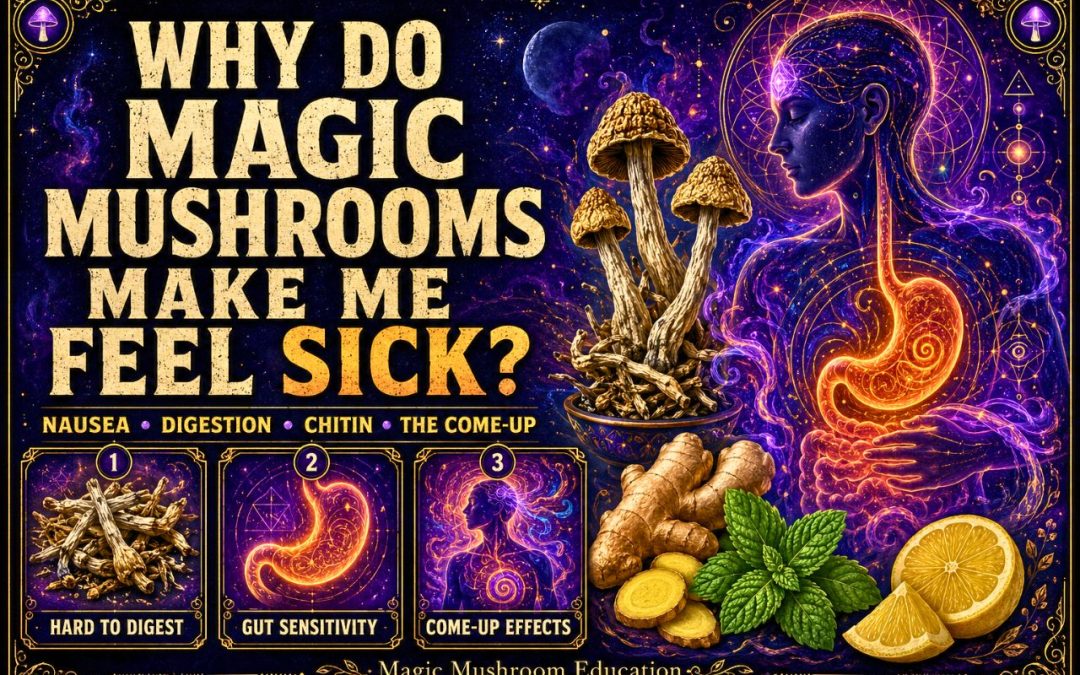
Why Do Magic Mushrooms Make Some People Feel Sick?
Feeling sick from magic mushrooms is more common than many people realize. Some people barely notice their stomach at all, while others feel nausea, heaviness, bloating, cramps, or a wave of discomfort during the first part of the experience.
This does not always mean the mushrooms are “bad” or that something has gone wrong. In many cases, the nausea comes from a mix of digestion, mushroom material, body chemistry, and the nervous system reacting to the beginning of the experience.
Magic mushrooms are not just psilocybin. They are dried fungal material, and that material still has to be broken down by the body. For people with sensitive stomachs, that alone can be enough to cause discomfort.
The Mushroom Material Itself Can Be Hard to Digest
One of the biggest reasons mushrooms can feel rough on the stomach is that they contain tough structural compounds.
Mushrooms have cell walls that contain chitin. Chitin is a fibrous material also found in the shells of insects and crustaceans. Humans can digest some mushroom material, but chitin is not as easy to break down as soft fruits, cooked vegetables, or simple liquids.
This is one reason dried mushrooms can feel heavy in the stomach. They are dry, fibrous, chewy, and sometimes difficult to break down completely, especially if they are swallowed in larger pieces.
For some people, this creates a feeling of pressure, nausea, or stomach tightness before the psychedelic effects fully begin.
Chitin and Stomach Discomfort
Chitin is not “bad,” but it can be irritating or difficult for some people’s digestion.
When dried mushrooms are eaten whole, the stomach has to soften and break down the mushroom material before the active compounds are fully available. This process can take time. During that window, some people feel stuck between digestion and onset — not fully feeling the effects yet, but already aware of stomach discomfort.
This may explain why some people feel better when mushrooms are prepared in ways that reduce the amount of dry material their stomach has to work through.
That is also why mushroom tea and lemon tek are often talked about by people who experience nausea. Those methods are usually used to make the mushroom material easier to consume or easier on the stomach, although everyone responds differently.
Read our guide on what is lemon tek to learn why some people use lemon juice before mushroom tea.
Psilocybin, Psilocin and the Gut
There may also be a chemical side to mushroom nausea.
Psilocybin is converted by the body into psilocin, which is the compound mainly responsible for the psychedelic effects. Psilocin interacts with serotonin receptors. Most people think of serotonin as a brain chemical, but a large amount of serotonin activity is connected to the gut.
The digestive system has its own nervous system, often called the enteric nervous system. This is one reason emotions, stress, anxiety, and altered states can all show up as stomach sensations.
So when mushrooms begin to take effect, the stomach may not just be reacting to the physical mushroom material. It may also be reacting to changes in serotonin signalling, body awareness, nervous system activity, and the early come-up.
This is why nausea from mushrooms can feel different from normal food nausea. It can feel emotional, energetic, tense, or wave-like instead of simply feeling like an upset stomach.
Is Psilocybin Absorbed in the Lower Intestine?
A lot of people wonder where mushrooms are actually absorbed.
The process starts in the digestive system. After mushrooms are consumed, psilocybin is converted into psilocin, and psilocin is absorbed into the bloodstream through the digestive tract. The small intestine plays an important role in absorption, but the full process involves the stomach, liver, intestines, and bloodstream working together.
So yes, the gut matters a lot. But it is not only about one exact spot in the lower intestine. Nausea can happen before, during, or after absorption because digestion, gut movement, serotonin activity, and the nervous system are all involved.
A better way to think about it is this: mushrooms affect both digestion and perception. The stomach is processing the mushroom material while the mind and body are starting to shift. That overlap can create nausea for some people.
The Come-Up Can Feel Like Nausea
The come-up is the transition period where the effects begin to build.
This stage can feel strange even when the stomach is not the main problem. Some people feel pressure in the body, temperature changes, yawning, butterflies, tightness, nervous energy, or a sense that something is “coming on.”
That feeling can easily be interpreted as nausea.
For some people, the come-up creates anxiety, and anxiety can tighten the stomach. For others, the body feels overstimulated before the mind relaxes into the experience. This can create a temporary wave of discomfort that fades once the peak begins.
This is one reason set and setting matter so much. A calm environment can make the come-up feel smoother, while stress or uncertainty can make every body sensation feel stronger.
Read our article on set and setting for psychedelic experiences before planning any mushroom experience.
Taste and Texture Can Make Nausea Worse
Sometimes the problem starts before digestion.
Dried mushrooms have a strong earthy flavour, and some people find the taste difficult to handle. The smell, texture, and act of chewing dry mushrooms can trigger a gag response before the body has even started breaking them down.
This can create a mental association: mushroom taste equals nausea.
Once that association forms, even smelling mushrooms can make some people feel sick. This is why two people can consume the same mushrooms and have completely different stomach reactions. One person may not care about the taste at all, while another may feel nauseous immediately.
For sensitive people, the flavour and texture are not small details. They can be a major part of the experience.
Food Timing Can Also Matter
What is already in the stomach can change how mushrooms feel.
A very heavy meal may slow digestion and make the come-up feel delayed, bloated, or uncomfortable. An empty stomach may make the effects feel more direct but can also make some people feel sensitive or unsettled.
There is no single perfect answer for everyone. Some people feel better with a light meal earlier in the day, while others prefer not to have much food sitting in the stomach. The key is that digestion matters.
If the stomach is already irritated, overly full, or unsettled before mushrooms are consumed, nausea may be more likely.
Does Nausea Mean the Mushrooms Are Bad?
Not necessarily.
Nausea can happen even with properly dried mushrooms. It can come from normal mushroom material, chitin, taste, serotonin activity, anxiety, or personal sensitivity.
However, mushrooms should always be properly dried, stored, and inspected. If mushrooms smell rotten, look moldy, feel wet when they should be dry, or seem contaminated, they should not be consumed.
Normal mushroom nausea and spoiled mushroom concerns are not the same thing. A little stomach discomfort during the come-up is common for some people. Signs of contamination or improper storage are a separate safety issue.
Read our guide on how long magic mushrooms last and how to store them to learn more about proper storage.
Why Some People Feel Sick Every Time
Some people are simply more sensitive.
A person may have a sensitive stomach, strong taste aversions, anxiety during the come-up, slower digestion, or a stronger gut response to serotonin changes. For these people, nausea may happen almost every time they eat dried mushrooms.
That does not mean the person is doing anything wrong. It may just mean their body does not respond well to the dry mushroom material or the way the effects arrive.
This is also why some people report better comfort with ginger, peppermint, lemon tek, mushroom tea, or other stomach-friendly approaches. These options do not work perfectly for everyone, but they may help some people manage the digestive side of the experience.
We will cover this more in a separate article on how to reduce mushroom nausea.
What May Help Mushroom Nausea?
This article is mainly about why mushrooms can make people feel sick, but it is worth briefly mentioning a few common approaches people talk about.
Ginger is one of the most popular natural options for nausea. Peppermint is also commonly used for digestive comfort, especially when stomach tension or cramping is part of the issue. Some people use lemon tek to soften the mushroom material and make the experience feel easier on digestion. Others prefer mushroom tea because it can be gentler than chewing dried mushrooms.
These methods are not guarantees, and they are not medical treatments. They are simply common approaches people use when they know mushrooms tend to bother their stomach.
The important point is that nausea has more than one cause, so one solution may not work for everyone.
Magic Mushroom Nausea FAQ
Why do magic mushrooms upset my stomach?
Magic mushrooms can upset the stomach because they contain fibrous mushroom material, including chitin, which can be harder to digest. Nausea may also come from serotonin activity in the gut, the taste and texture of dried mushrooms, anxiety, or the intensity of the come-up.
Is nausea normal with magic mushrooms?
Some nausea is common for many people, especially during the come-up. It does not always mean something is wrong, but severe or unusual symptoms should be taken seriously.
Does chitin cause mushroom nausea?
Chitin may be one reason mushrooms feel hard to digest. It is a tough structural material found in mushroom cell walls. Some people may be more sensitive to it than others.
Why do I feel sick before the mushrooms kick in?
The stomach may be working to break down the dried mushroom material before the effects fully begin. At the same time, the nervous system may be reacting to the early come-up, which can feel like nausea, tension, butterflies, or anxiety.
Can mushroom tea help with nausea?
Many people find mushroom tea easier on the stomach than eating dried mushrooms, mainly because it avoids chewing dry mushroom material and may feel gentler to consume.
Can lemon tek help with mushroom nausea?
Some people report that lemon tek feels easier on the stomach because the lemon juice helps soften the mushroom material and may make the effects come on sooner. However, it can also make the experience feel stronger for some people.
Can ginger or peppermint help?
Ginger and peppermint are commonly used for nausea and digestive comfort. Some people find them helpful with mushroom-related stomach discomfort, but results can vary.
Final Thoughts: Why Do Magic Mushrooms Make Me Feel Sick?
Magic mushrooms can make some people feel sick because the experience involves both digestion and body chemistry. The stomach has to process dried mushroom material, including chitin, while psilocybin is being converted into psilocin and the nervous system begins to shift.
For some people, nausea comes mostly from the physical mushroom material. For others, it comes from taste, anxiety, serotonin activity in the gut, or the intensity of the come-up. Often, it is a combination of several things at once.
The good news is that mushroom nausea is usually better understood once you know what may be causing it. In many cases, it is not random. It is the body reacting to a strong digestive and sensory experience.
A separate article on ginger, peppermint, lemon tek, mushroom tea, and other stomach-friendly approaches can help explain what people commonly use when mushrooms are hard on the stomach.